
Florida Mugshots and Public Records
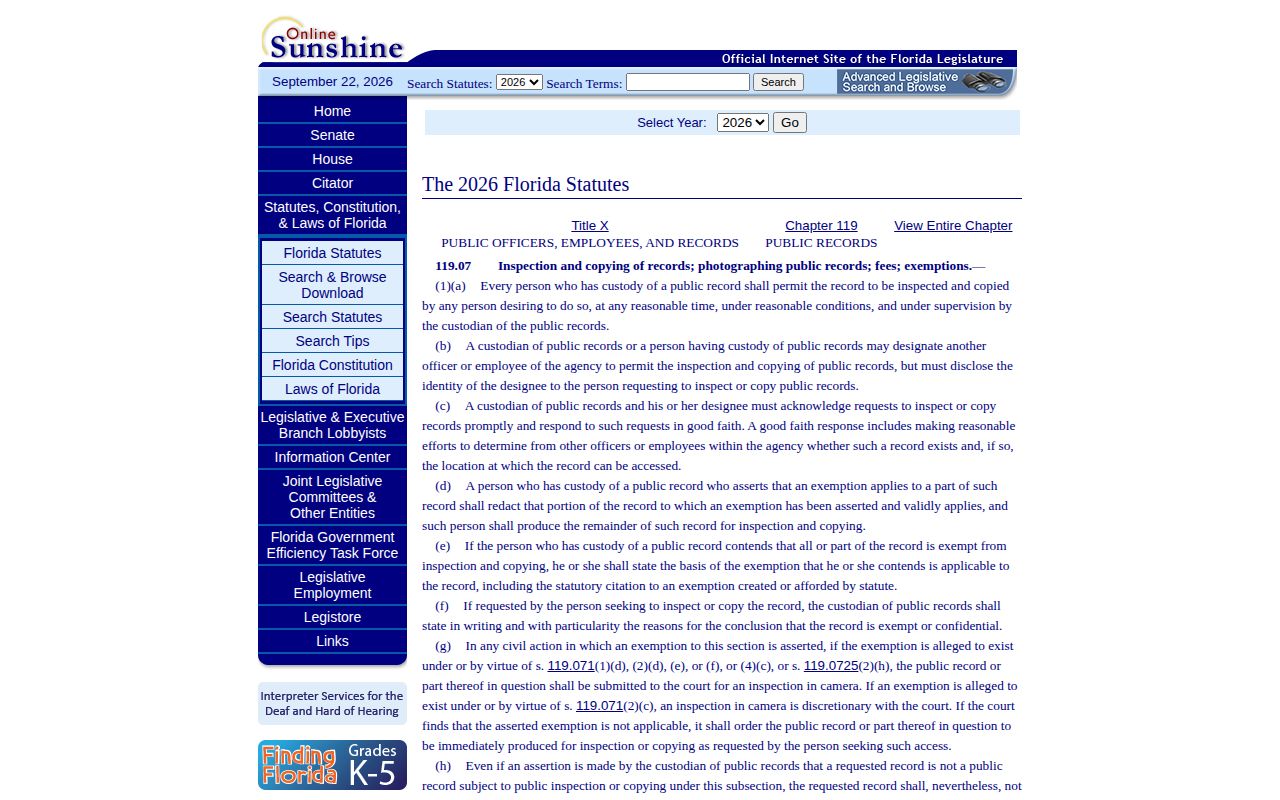
Usually, yes. A booking photo made or kept by a Florida law-enforcement agency counts as an agency record, and the public can generally inspect or copy it unless an exemption applies. Article I, section 24 of the Florida Constitution pairs with chapter 119 to create that broad right. Under section 119.07, a custodian must open records at reasonable times, respond promptly and in good faith, redact exempt portions, and release the rest, naming the statute behind any exemption it claims. That duty is about access, though. No sheriff is ordered to post every image online. The agency holding the photo is the one to ask.
Florida's public-records statute spells out the inspection, response, and redaction terms. It sets a request process rather than any duty to publish images online.
The Attorney General's booking-photo opinion restates the general rule. A law-enforcement image is a public record. A valid exemption, such as a protected officer's confidentiality election, can still block access. The opinion is legal analysis, not a photo database. Someone seeking an image should contact the booking agency directly.
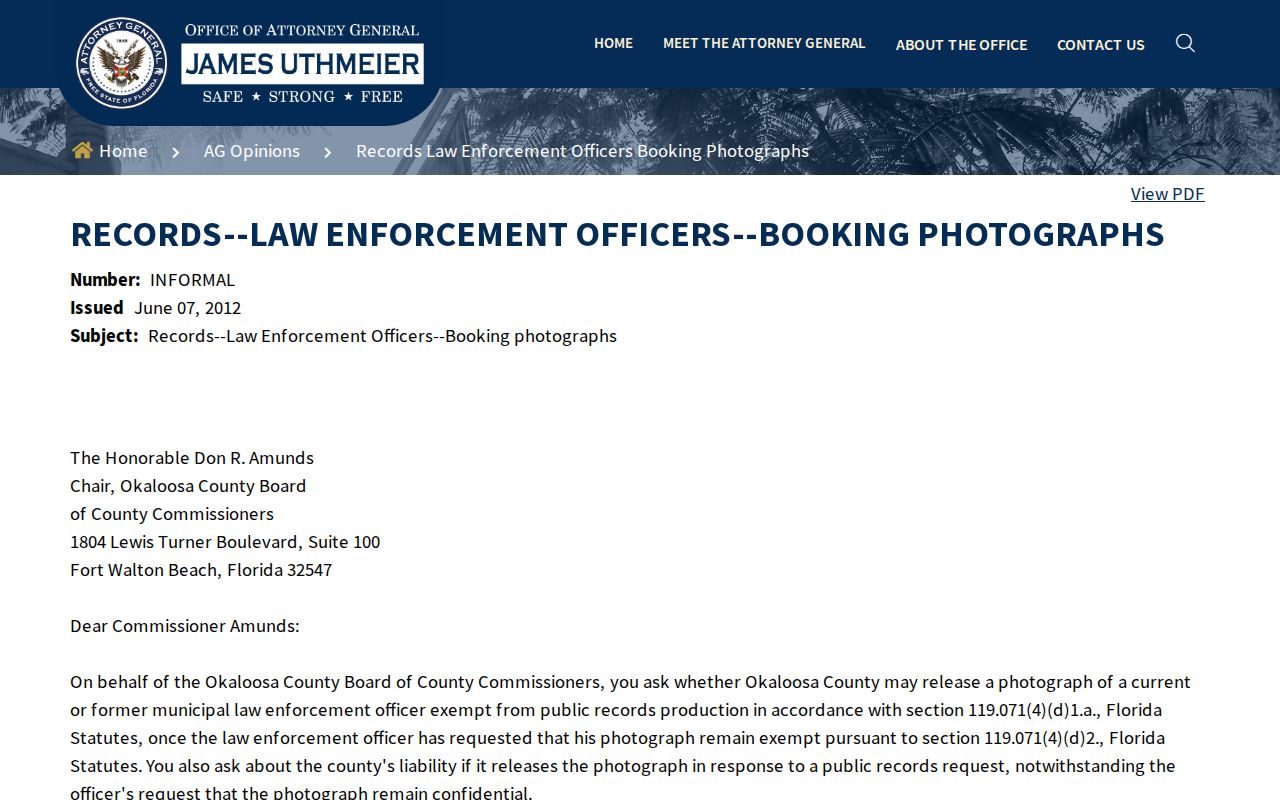
The opinion does not wipe out exemptions or force agencies to run searchable photo pages. When an online roster shows nothing, a records request is the direct route.
Note: Public access to a booking image and the court's final case outcome are separate record questions.
| Question | Florida records rule |
|---|---|
| Is an agency booking photo public? | Generally, if held by law enforcement and no exemption applies. |
| Must every agency post it online? | No. Inspection rights do not require a public roster or website display. |
| Can exempt details be withheld? | Yes. The custodian may redact exempt portions and release the nonexempt remainder. |
Florida Sealing and Expungement
Sealing and expungement work differently. A sealed record closes to ordinary public access but stays open to certain government users. Expunction directs agencies to destroy or obliterate the record. FDLE still keeps a confidential copy for purposes the law allows. Neither word guarantees that cached pages, news stories, or social posts vanish overnight.
FDLE's process starts with a Certificate of Eligibility, then a petition to the court. The certificate is not an order, and it does not bind a judge. Common eligibility conditions apply. There must be no prior Florida sealing or expungement and no adjudication of guilt for the offense. The case also needs a qualifying outcome, no disqualifying offense, and compliance with supervision rules. The statutes and FDLE's current checklist control the details.
FDLE states that its eligibility certificate application costs $75. It stays valid for 12 months. Processing commonly takes more than 12 weeks, and no expedited review is offered. The controlling statutes include section 943.059 on sealing and section 943.0585 on expunction. A narrower automatic route under section 943.0595 covers specified outcomes. Those include some cases with no charging document filed. Dismissals of all counts also qualify. So does a nolle prosequi, a formal decision to stop prosecution, subject to statutory exceptions. A not-guilty verdict or acquittal on every count counts too. The clerk sends a certified disposition to FDLE. After FDLE seals it and notifies the clerk, the court record becomes confidential. This section does not require other criminal-justice agencies to seal their copies. Excluded offense categories still apply. The statute is not a blanket promise that every copy everywhere disappears.
FDLE's sealing and expungement FAQ walks through the certificate and petition steps. An order changes the government record. It does not, by itself, command a private publisher to delete a copy. Each agency still applies the order alongside its own legal duties.
- Disposition
- The court's recorded outcome, such as dismissal, acquittal, or adjudication withheld.
- Sealing
- A court-ordered limit on public access, with specified government access still allowed.
- Expunction
- A court-directed destruction or obliteration of agency records, subject to statutory exceptions.
- Private copy
- A separate copy held by a publisher that may require its own correction or removal request.
Florida Free Site Requests
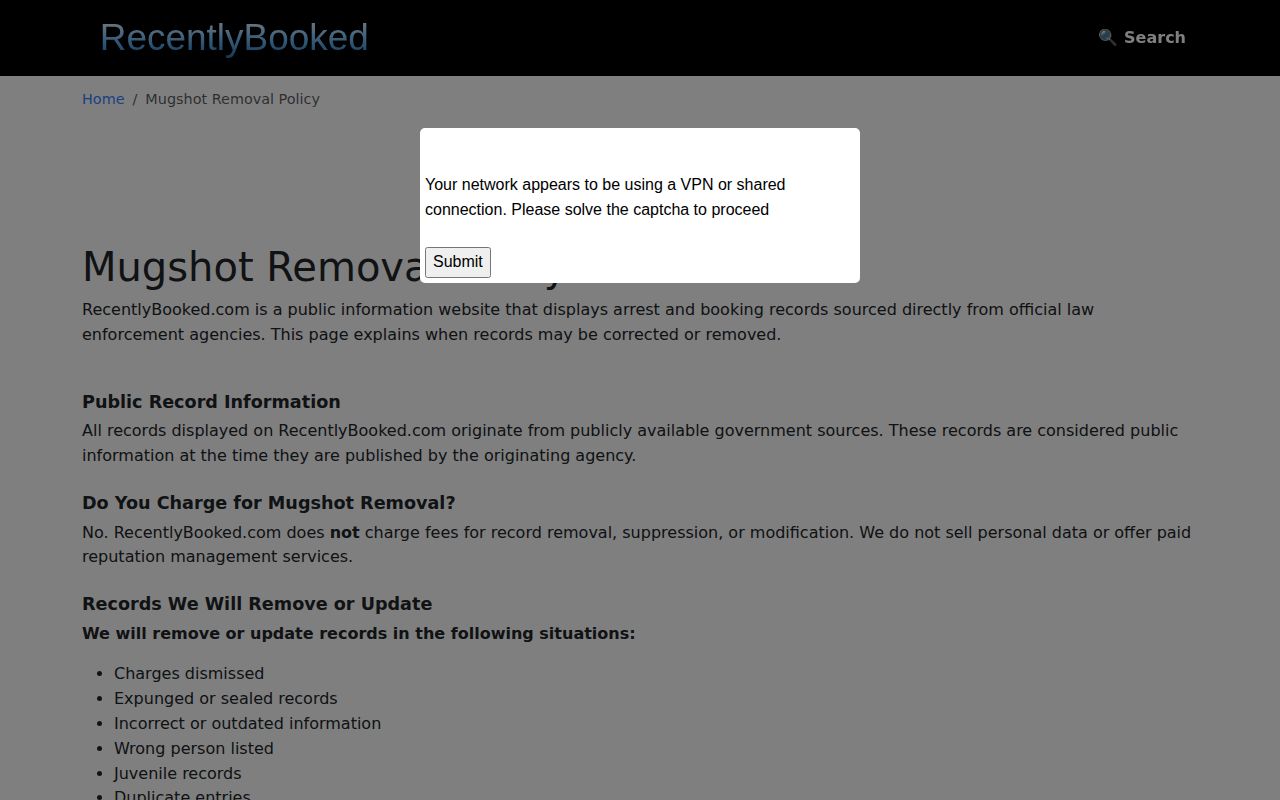
Private booking-photo sites hold copies, not the official court or sheriff record. RecentlyBooked accepts free requests for several situations. These include an incorrect record, a wrong person, a duplicate, a juvenile record, a sealed or expunged matter, a dismissal, or another documented change. Its policy wants the exact page link plus supporting details. An accurate, current public record is not ordinarily removed just because someone asks. The request is voluntary. It stands apart from the registered-mail route in section 901.43. Check the current free-request policy before sending anything.
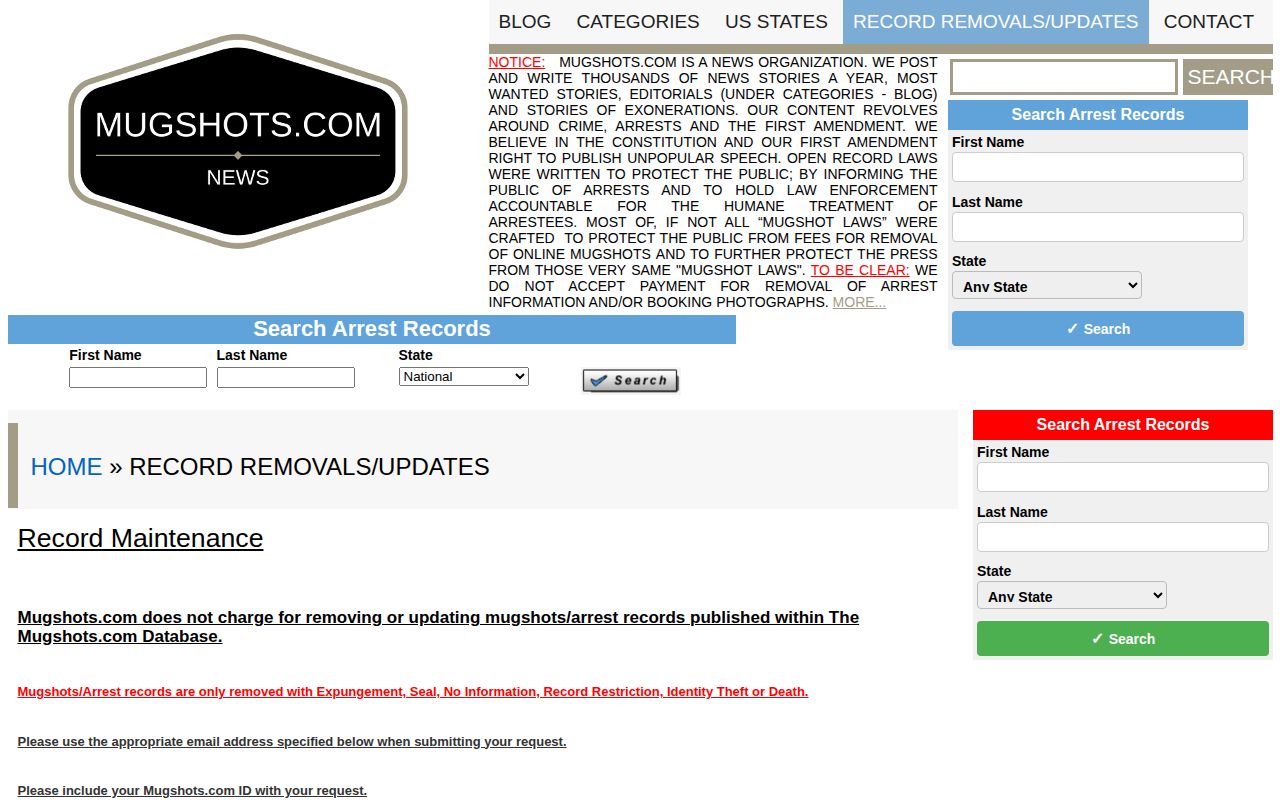
Mugshots.com offers a free record-maintenance process. Certain official outcomes qualify a listing for removal there. Others do not. An acquittal, a dismissal, or withheld adjudication may instead lead the site to update the page rather than drop it. The request asks for signed court documents plus an ID. Its current terms distinguish updates from removals, and that policy page, not a court record, governs the listing.
More Florida-facing sites sit outside the official system. Busted Newspaper's Florida index breaks its coverage into county pages, and the site publishes no clear statewide free-removal policy. Arrests.org's Florida pages do list a removal area. But no stable published standard stands behind it, and nothing promises a free result. Mugshots.zone's Florida index points requesters to county forms. Requests there are page-specific. These copies can lag behind agency updates, omit a court disposition, or simply carry errors, so confirm details with the arresting agency and the clerk before relying on them. News stories follow their own editorial policies. The statutory request does not automatically reach every report. Be wary of anyone demanding payment for a guaranteed removal everywhere. No middleman can edit a court docket or control every online copy.
Florida Records Still Available
One site dropping a photo does not close the file. Sheriffs, jail custodians, and arresting agencies hold the official booking photos and booking sheets. Florida keeps no single statewide jail-mugshot repository. FDLE notes that suspect photos are taken at the jail. They are not readily available through its statewide systems. A county roster shows who is in custody now. The booking record can outlive release, depending on the custodian's retention and access rules. Make the request specific. Name the agency. Describe the item, such as a booking photo and sheet for a person. Include a date or number if known. Ask for an electronic copy of the item where that helps. Lawful redactions should be expected. Asking for every photo statewide is no substitute. Identify the custodian who actually holds the record.
The Florida Department of State schedule GS2 sets retention floors. Booking records must be kept at least one anniversary year after release. Commitment or release lists share that minimum. Jail docket books are listed as permanent. Those are minimum schedules for agencies. They are not promises about how long any website keeps a search result. Agencies can hold records longer. Online display windows vary. A photo may sit in the file without ever being posted. Private copies can also persist after the official roster changes.
Find the county first. Its Clerk of Court criminal docket is the place for case outcomes. Florida's ACIS public portal covers appellate and Supreme Court material, not every county trial-court criminal case. The secure Clerks CCIS system is no general public substitute. The statewide Florida booking-record and roster overview follows the official lookup path. Sentenced state prisoners belong in the FDC offender-photo search, not a county booking feed. Verify the originating record and the court disposition before repeating any claim about a person.
Note: A web search window is not Florida's retention rule, and custodians may keep records longer than a portal displays them.
Florida Section 901.43 Scope
Florida Statutes §901.43 carries the title "Dissemination of arrest booking photographs." It does not make booking photos secret. Nor does it hand every publisher a general takedown duty. The law instead targets paid removal demands and businesses built on commercially publishing booking photos. That limit matters to a newspaper or broadcaster covering an arrest as ordinary news.
Subsection (1) sets the core bar. It covers a person or entity in the business of publishing or spreading booking photos. The media may be print or electronic. That publisher may not solicit or accept payment to remove them. Subsection (5) adds a boundary. Sharing information about booking photos does not, by itself, bring a publisher under the section. The statute bites only under its own named conditions. The publisher must solicit or accept payment for removal. Or it must run a primary business model of commercial publication and dissemination of booking photos. A routine news report does not fall into the same request process.
The official text lays out all five subsections. Those cover the request route, timing, and enforcement rules. The Florida Senate page displays the statute itself. Read Florida's current booking-photo statute for the registered-agent route and its coverage limits.
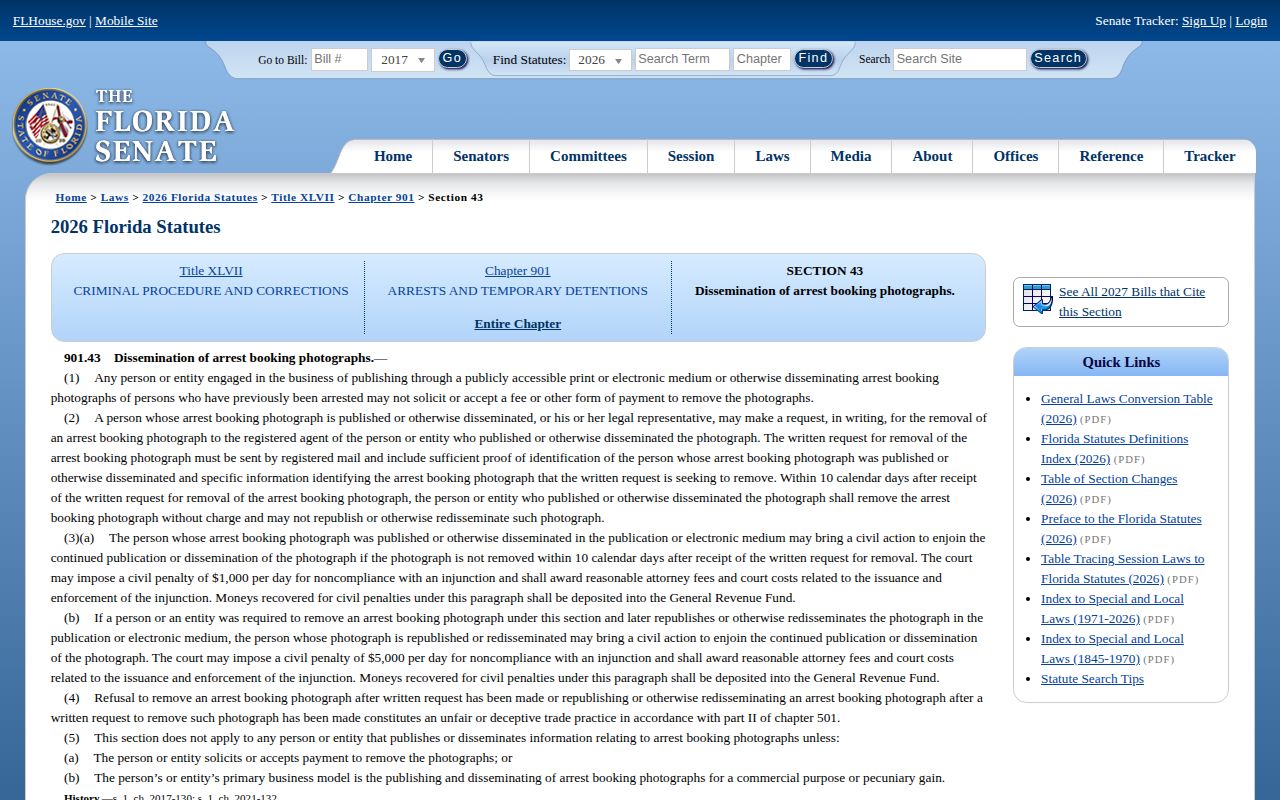
This text binds publishers, not government custodians. A request here never erases an arrest entry or edits a court docket. No agency is told to destroy its copy.
Florida Removal Request Steps
Someone pictured in a covered booking photo can demand its removal under the statute. That person's lawyer can send the demand too. The request has to be in writing. It goes by registered mail to the publisher's registered agent. Identify yourself with enough proof, and point to the exact image at issue. A web form can back up a voluntary correction. So can a plain email. But the statutory clock only starts when a compliant registered-mail request arrives.
Keep the letter narrow and save a copy. The law targets one photograph, not every trace of a case online. The deadline period begins once the publisher receives a request that follows the rules.
- Save the exact page address and identify the image or record shown there.
- Confirm that the requester is the pictured person or a legal representative, then prepare sufficient proof of identity.
- Send a written request by registered mail to the publisher's registered agent. Name the specific booking photograph and avoid sending more sensitive material than needed.
- Keep mailing and delivery proof. The publisher has 10 calendar days after receipt to remove the image without charge.
- If the publisher is covered and does not comply, the statute describes a civil action for an injunction. Consult a lawyer about the facts and proper service.
Once removal happens, the publisher cannot put the photo back up. Violate that and the statute allows an injunction. Breaking an injunction carries a civil penalty of $1,000 per day. Attorney fees and costs come too. Republish the image later and a new injunction can impose $5,000 per day. Fees apply again. Florida also treats refusal to remove as an unfair or deceptive trade practice under chapter 501. Later republication counts the same way. These remedies run through the courts. They are not a criminal penalty or an FDLE-run takedown.
No dismissal or expunction is needed before sending a compliant request. Coverage still depends on the publisher fitting the law's scope, though. And a compliant request seals no docket. It equals no acquittal. It wipes out no unrelated copies of the photo.
Florida Law History
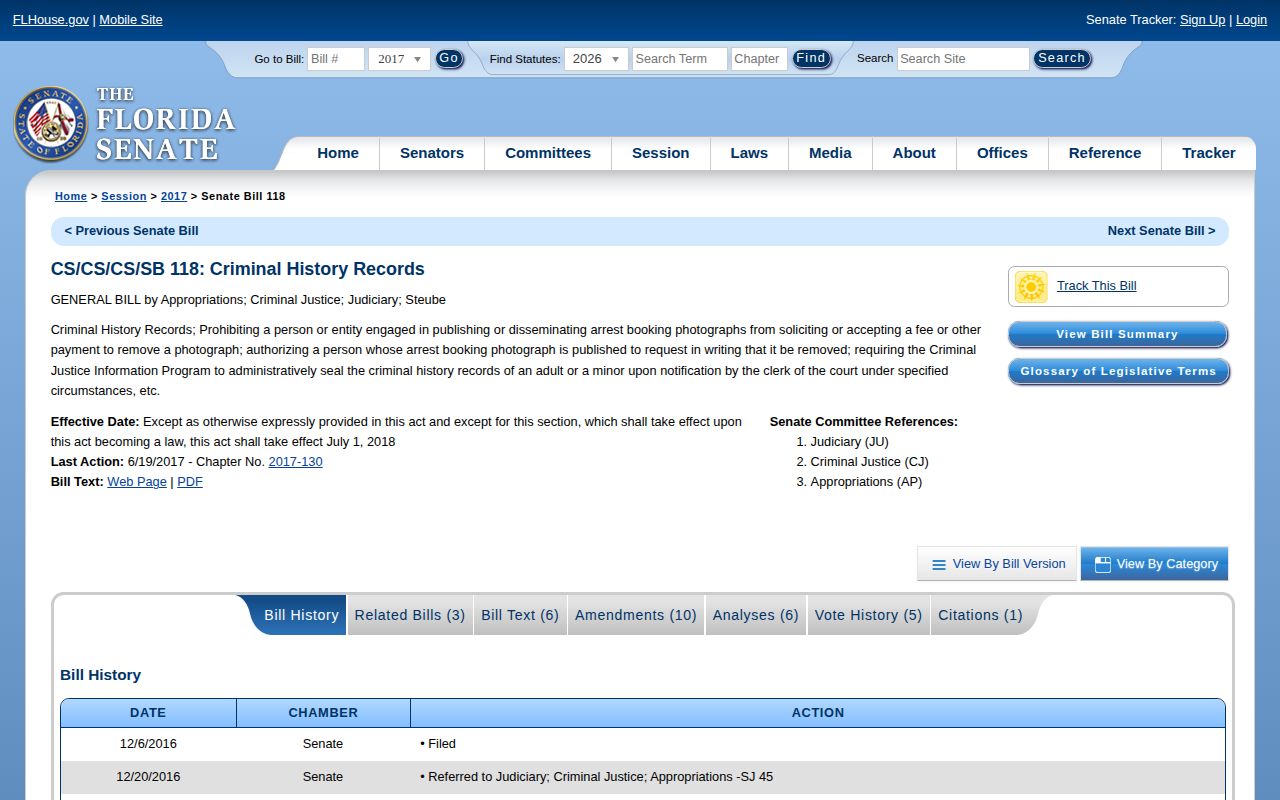
The Legislature created this process in 2017 through Senate Bill 118, chapter 2017-130. It took effect July 1, 2018. That first version built the whole framework. It included free removal, registered-mail requests, a 10-day period, a civil action, and treatment as an unfair trade practice. The bill record helps place the current statute in context. Review the Florida Senate's 2017 SB 118 record for the original enactment history.
Chapter 2021-132 amended the law in 2021. The change took effect October 1, 2021. It widened coverage to a commercial booking-photo business model. It also added an express ban on republication or redissemination. That matters because the current section reaches beyond sites that charge for takedowns.
A federal suit, Grant et al. v. State of Florida, challenged the amendment in the Middle District of Florida. The case ended in a voluntary dismissal in December 2021. No published merits opinion appears in the record. So it settled nothing about the statute's validity. Earlier litigation, including Bilotta v. Citizens Information Associates, addressed booking-photo publication and public-record questions before the amendment. It does not fix the current law's reach either.
Florida Juvenile Record Limits
Florida keeps some juvenile records open and others sealed. Section 985.04 generally shields juvenile court and law-enforcement information. There is an exception. A child's name, photograph, address, and crime or arrest report can be released in two situations. One is custody for conduct that would be a felony for an adult. The other is a case that moves to adult prosecution. Each release stays subject to the statute's conditions. Juvenile misdemeanor records stay confidential in most cases.
Section 943.053 and FDLE's criminal-history guidance set related limits on releasing juvenile information. A photo on some secondary website proves neither lawful publication nor an open record. Age at arrest matters. So does the offense category, the agency's authority, and any court order entered later. Do not repost a young person's image just because a search result makes copying easy.
Expunction follows its own track. Section 943.0515 sets automatic expunction timing for many juvenile records. Serious or habitual cases stay longer. Specified offenses carry exceptions. No rule promises every juvenile image vanishes at 18 or 21. Diversionary and human-trafficking-related expunction provisions apply only when their narrow requirements are met.