
Where Old Florida Photos Survive
Start with the agency that made the booking. That is usually the county sheriff, the jail, or the arresting police department. A file can stay with that custodian. It may sit in a local records system or age out of its retention period. Nothing moves to Tallahassee automatically. The State Archives of Florida holds selected state-government records, not a full statewide run of county jail photographs. Florida Memory puts some of that material online. Treat it as a discovery aid, though. It is not a promise that a given county's booking cards are there. Keep three records straight. The booking image is one thing. The arrest or jail record is another, and the court case is a third. A clerk's docket may show what happened after arrest without holding the photo itself. A news collection can preserve a copy of an old image and still not be the agency's booking file. Before contacting anyone, write down the county, the agency, the name used at the time, and a narrow date range. That detail helps a custodian separate one series from a blanket request for every old mugshot in Florida.
The state public-records rule generally lets you inspect and copy agency records, subject to exemptions and lawful redactions. The §119.07 inspection and copy page lays out that statewide rule. It promises no photo collection. A record may no longer exist. Some fields stay closed. Posting online is never guaranteed. Treat the page as a legal reference, not a database of old booking photos.
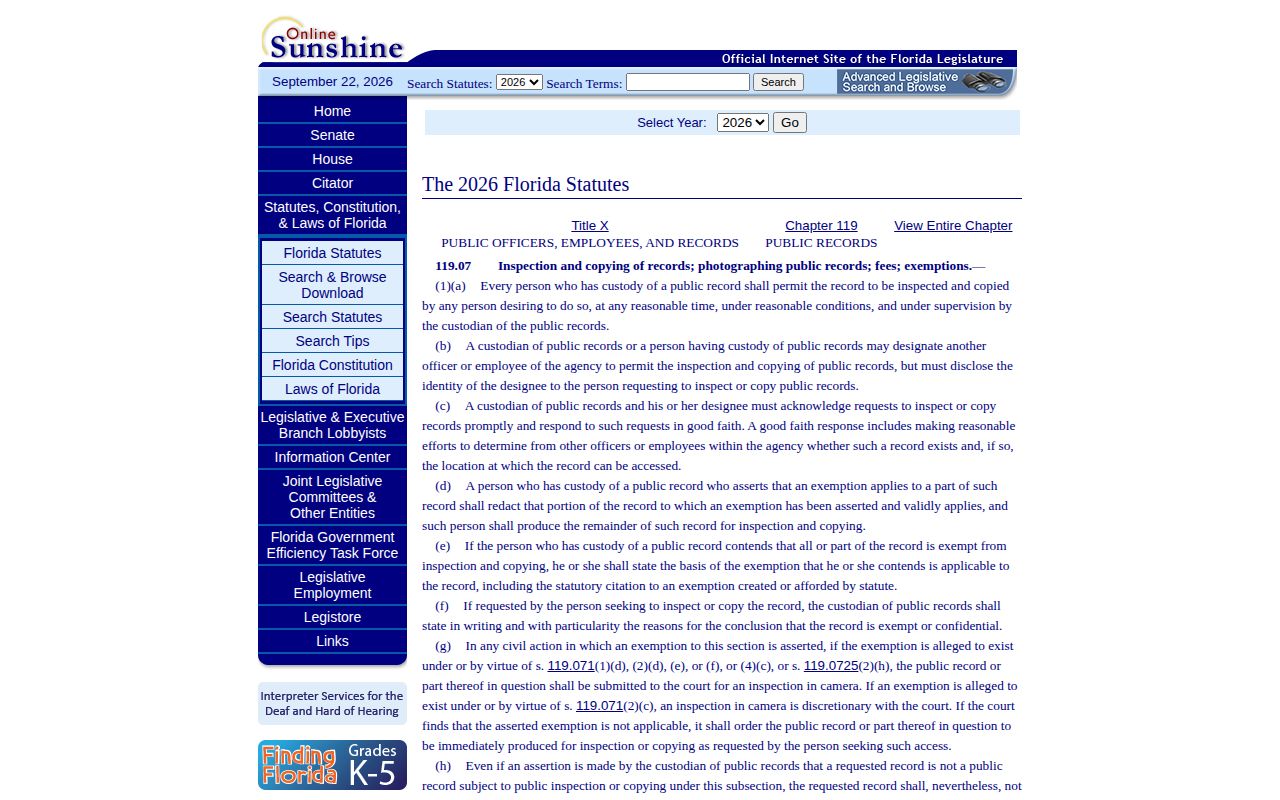
The law page just frames the request. The office that holds the file still applies exemptions and redactions before releasing anything.
Florida Archive Collection Paths
Any archive inventory here stays deliberately short. Collection limits matter as much as contents. The Florida Department of Corrections photographic collection covers institutions, personnel, and facilities. It is not a run of county booking cards. Two individual Florida Memory items show an arrest image surviving inside a historical collection. They do not add up to a general county series or a complete photo history.
| Collection or record | Coverage shown | How to access |
|---|---|---|
| State Archives of Florida holdings | Selected state-government records; no guaranteed statewide county-photo set | Search the Archives research catalog and guidance; ask reference staff about a named record series. |
| FDC photographic collection | Corrections institutions, personnel, and facilities, about 1940–2006 | Open the Florida Memory collection record and follow its item and rights details. |
| Gerald Stano news-service footage | A selected historical Florida News Service item that includes a mugshot | Use the Florida Memory item record; it is not a current booking file. |
| Ted Bundy arrest image | A named historical image photographed in July 1978 | Review the Florida Memory item metadata and its use restrictions. |
| County jail docket books | Records designated permanent by Florida’s GS2 schedule; photo inclusion is not assured | Ask the county custodian whether the docket for the relevant period survives. |
These entries are different kinds of evidence. A Florida Memory item page supplies the catalog context for digitized material, while an FDC collection points to correctional institutions and agency imagery. Neither works as a statewide booking index. A county jail docket is a government record under a retention rule, not a guaranteed image file. Let the named series pick the custodian. Then read the item's creator, date, and rights note before calling it an arrest photograph.
Citations should carry the full context. A digitized item may be a reproduction or a news image rather than the booking agency's original, so include the date, collection name, and rights note with any citation. Catalog results sometimes name a box, folder, or series. Keep those identifiers. They give archive staff a concrete target. That makes a later on-site lookup more direct.
Florida Retention Versus Online Display
Florida's General Records Schedule GS2 sets minimum retention periods. Item 16 covers booking and intake material. That includes the charge, the arresting and booking officer, time and place, and a probable-cause summary. The floor is one anniversary year after release, subject to the schedule's wording and audit needs. Item 22 covers commitment and release lists. A 24-hour list sits here too, with a similar one-anniversary-year minimum after release. Item 61 lists jail docket books as permanent. Agencies may keep records longer than these minimums.
A retention floor is not a display rule. The schedule never fixes when a booking photo leaves a website. Retention is a records-management duty, while a portal is a search product with its own window. A photo can drop off a roster. The booking record may stay in agency custody. A third party may keep a copy, and neither outcome changes the record's retention category. Ask the custodian to search the correct item or record series and say whether the photograph is still held. If it is gone, ask whether a jail docket, release list, or related booking record survives. Item 61 describes the docket book, not a guaranteed photo index. Read the schedule as minimums, not a removal date for a web page.
The Florida Department of Corrections menu separates inmate, release, escape, and absconder searches. Those are state-prison and supervision records. They are not county booking archives.
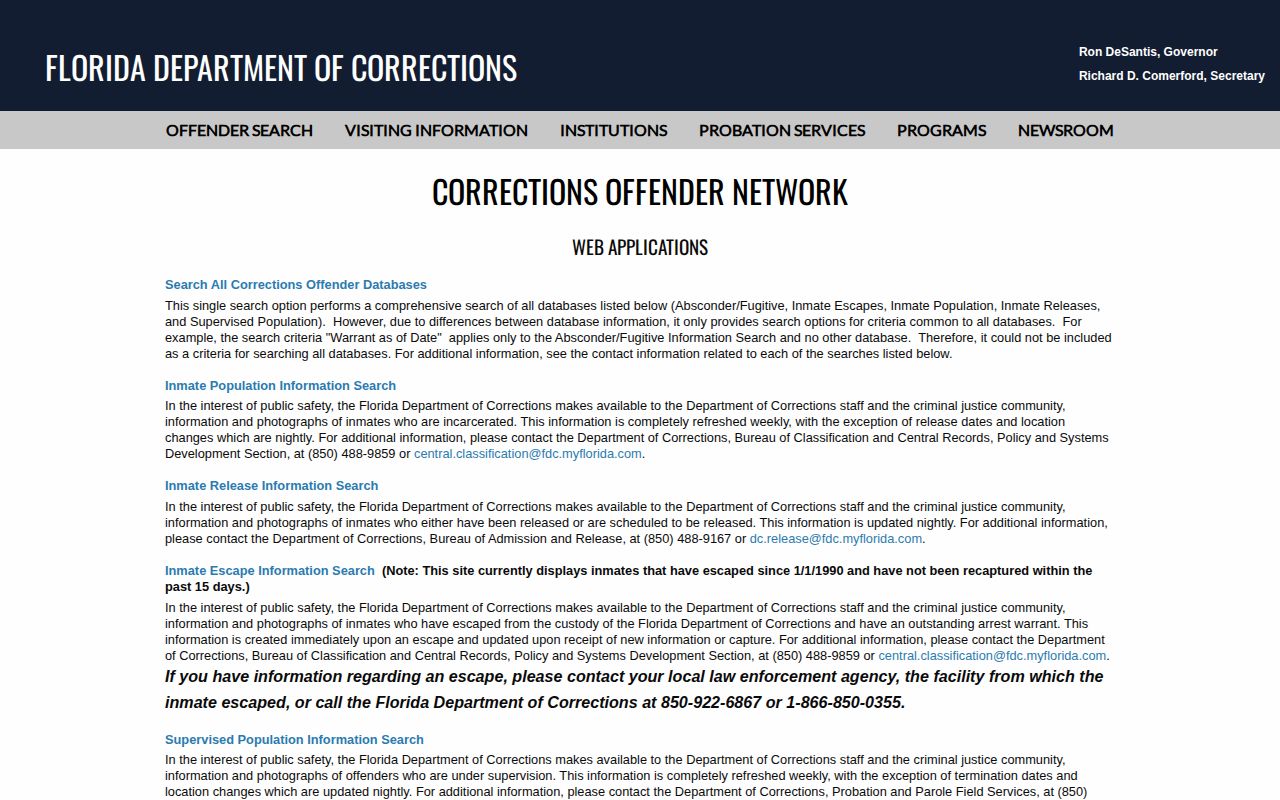
The menu is handy for tracing state-custody history. A county arrest photo still belongs with the local booking custodian.
Note: A retention minimum applies to the listed government record and does not set the length of a website’s search window.
Plan a Florida Archives Request
Name the item and the odds improve. Staff then know which agency and series you mean. Start with the likely custodian. A sheriff or jail holds local booking material, while the State Archives answers questions about holdings transferred into state custody. Ask for something defined: a booking photograph, booking card, jail docket, commitment or release list, or corrections photograph. Include the county, agency, and approximate booking year. Add the name and any case or booking number you know.
- Search the State Archives research guidance and catalog by agency, county, time period, person, and record-series terms. A name-only search may not identify the series.
- Write down any record-group, series, box, or folder identifier. If the catalog is unclear, ask Archives reference staff whether a sheriff, custody, corrections, prison, or news-photograph series could contain the item.
- For State Archives reference help, use 850-245-6719 or archives@dos.myflorida.com. Ask about on-site needs and any access limits in the catalog before making travel plans.
- If travel is not possible, request the remote-research service. It offers limited research time and does not promise broad surname or detailed genealogy searches; a large series may call for an on-site visit or private researcher.
- After locating a specific item, review the duplication rules. Copies are made on demand, large orders may take more than a day, fees are due in advance, and visitor photography is without flash and subject to staff direction.
File the request and the reply with the citation. If staff cannot locate an image, ask why. The record may have never been transferred, or it sits under another series. It may be restricted or simply no longer survive. Those are different answers, and the Archives can confirm only its own holdings, not every county's files. The FDC public-records page offers a separate route for records the Department of Corrections holds.
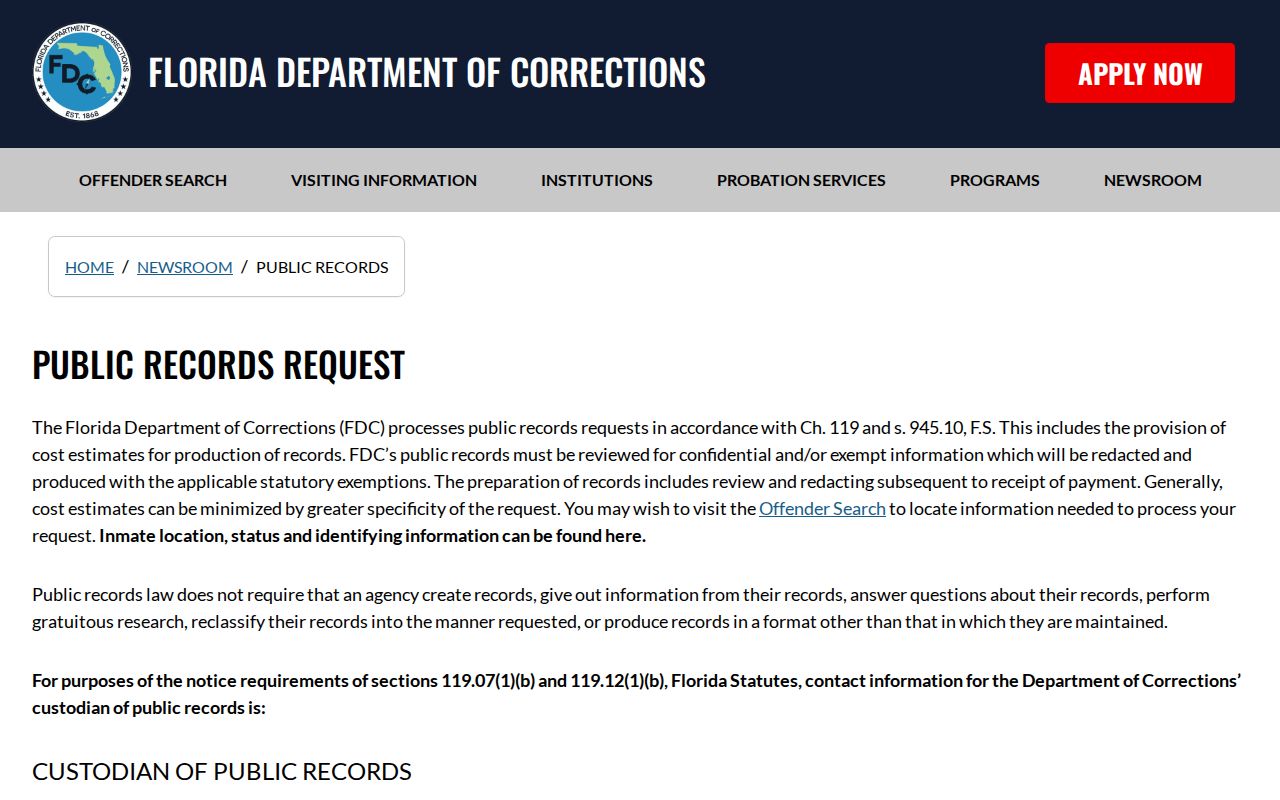
Use that route for FDC records. Think corrections photographs or agency files, not a county jail's old booking image.
When an Old Photo Is Missing
Recent county booking records start locally. Go to the sheriff, jail, or arresting agency. The Florida County Directory routes a search to the right locality, and the statewide arrest and mugshot hub explains the main current-record paths. For older records, ask the local custodian. Ask about the retention schedule first. Then try the State Archives. A clerk's criminal docket can verify the case and its result. Florida's statewide appellate search is no substitute for a county trial-court docket. The Florida Courts ACIS portal covers appellate and Supreme Court case information. It helps when an older case had an appeal. Trial-level matters belong with the county clerk that holds them.
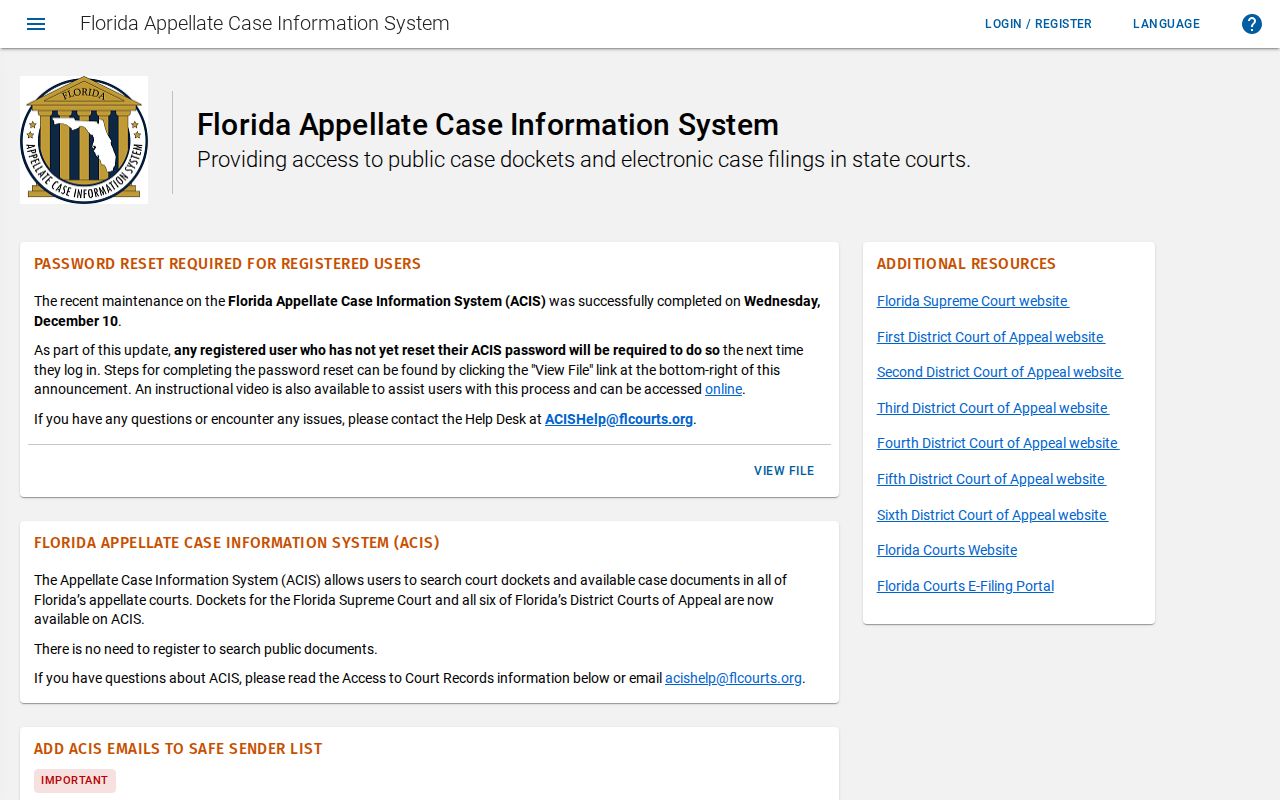
The ACIS landing view names a statewide appellate route, distinct from any county criminal docket search.
No online result does not mean no record. Put a written request to the office that made or holds it. State the booking name, county, agency, and approximate date. Name the exact item you want. Request an electronic copy and allow for lawful redactions. If the custodian says no photo is held, ask about related docket or release records and where to confirm the case result. A search may end with a documented absence, but a gap is not proof the image never existed.